
Insulated Concrete Formwork vs Timberframe
Insulated Concrete Formwork vs Timberframe
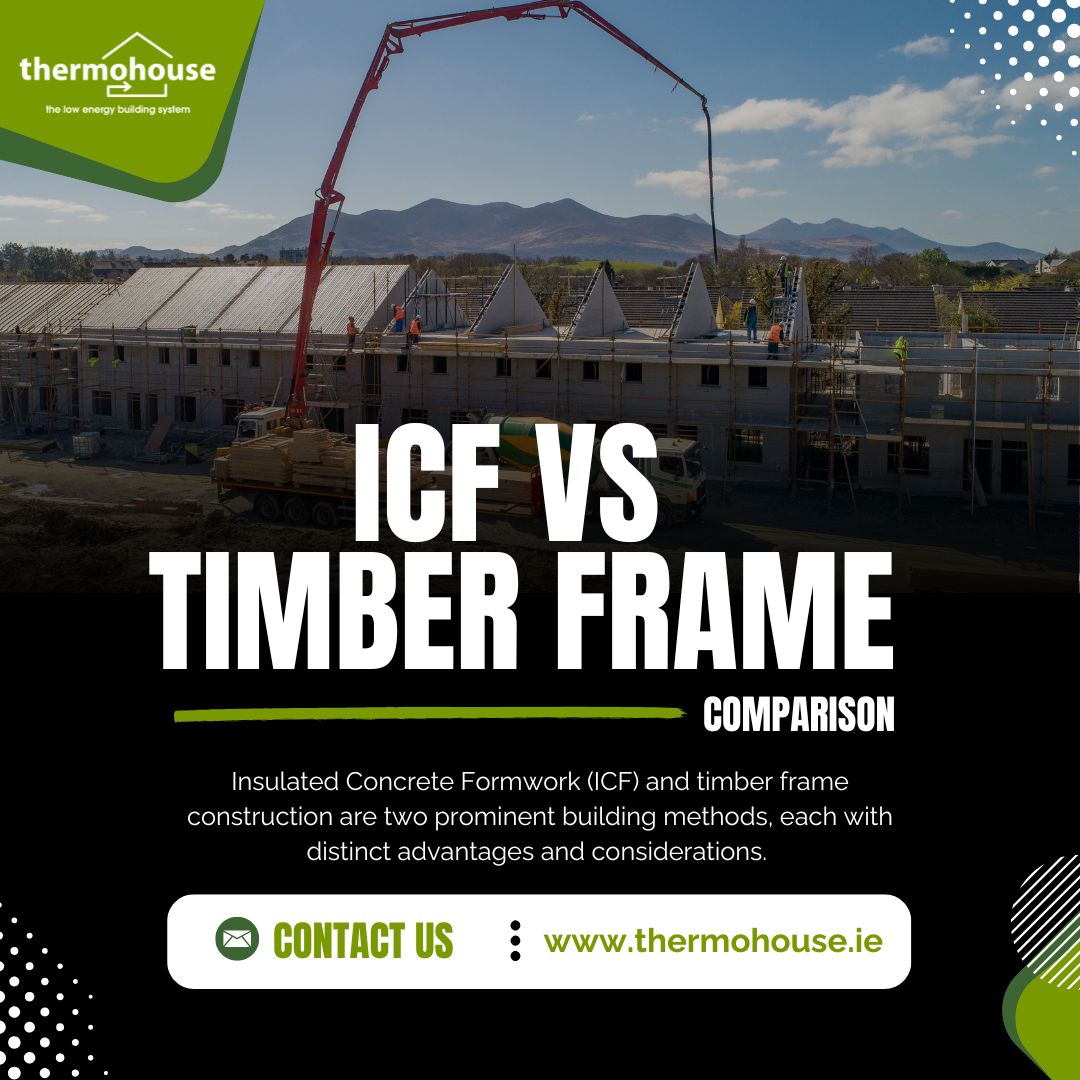
Insulated Concrete Formwork (ICF) and timber frame construction are two prominent building methods, each with distinct advantages and considerations. Here’s a comparative overview:
Compare
- Construction Speed and Labor
- ICF: ICF systems can expedite construction due to their modular design, reducing the number of trades required on-site. This streamlined process often leads to faster project completion.
- Timber Frame: Timber frame construction is also known for its quick assembly, especially when prefabricated components are used. The speed can vary based on the complexity of the design and the experience of the construction team.
- Thermal Performance and Energy Efficiency
- ICF: ICF structures offer superior thermal insulation due to the continuous foam insulation, resulting in energy-efficient buildings with stable indoor temperatures.
- Timber Frame: Timber frame buildings can achieve good thermal performance, especially when combined with high-quality insulation materials. However, achieving optimal energy efficiency may require careful attention to insulation details and airtightness.
- Durability and Maintenance
- ICF: ICF buildings are highly durable, offering resistance to fire, pests, and moisture. The concrete core provides structural strength and longevity.
- Timber Frame: While timber is a renewable resource, it requires proper treatment and maintenance to prevent issues like rot, pests, and moisture damage. Regular upkeep is essential to maintain the building’s integrity.
- Cost Considerations
- ICF: The initial material costs for ICF can be higher than traditional timber framing. However, potential savings in energy costs and reduced maintenance over time can offset the initial investment.
- Timber Frame: Timber frame construction can be more cost-effective initially, especially when using locally sourced materials. However, long-term maintenance costs should be considered.
- Environmental Impact
- ICF: ICF systems can be more environmentally friendly due to their energy efficiency and the potential for using recycled materials in the foam components. The concrete used in ICF can also be sourced sustainably.
- Timber Frame: Timber is a renewable resource, and when sourced responsibly, timber frame construction can have a lower carbon footprint. Sustainable forestry practices are crucial to maximize environmental benefits.
- Acoustic Performance
- ICF: ICF buildings provide excellent sound insulation, reducing noise transmission between rooms and from external sources.
- Timber Frame: Timber frame buildings may require additional soundproofing measures to achieve similar acoustic performance, depending on the design and materials used.
- Aesthetic Flexibility
- ICF: ICF allows for a variety of exterior finishes, including stucco, brick, or siding, providing design flexibility.
- Timber Frame: Timber frame construction offers a distinctive aesthetic with exposed wooden beams and can be combined with various cladding materials to achieve the desired look.
Conclusion
Both ICF and timber frame construction methods offer unique benefits. ICF is advantageous for its durability, energy efficiency, and speed of construction, making it suitable for projects where these factors are prioritized. Timber frame construction is valued for its cost-effectiveness, renewable material use, and aesthetic appeal, especially in regions with abundant timber resources. The choice between the two should consider project-specific requirements, budget constraints, environmental impact, and desired building performance.


Fire resistance comparison

Fire
When evaluating fire resistance between Insulated Concrete Formwork (ICF) and timber frame construction, several key factors emerge:
- Fire Resistance Ratings
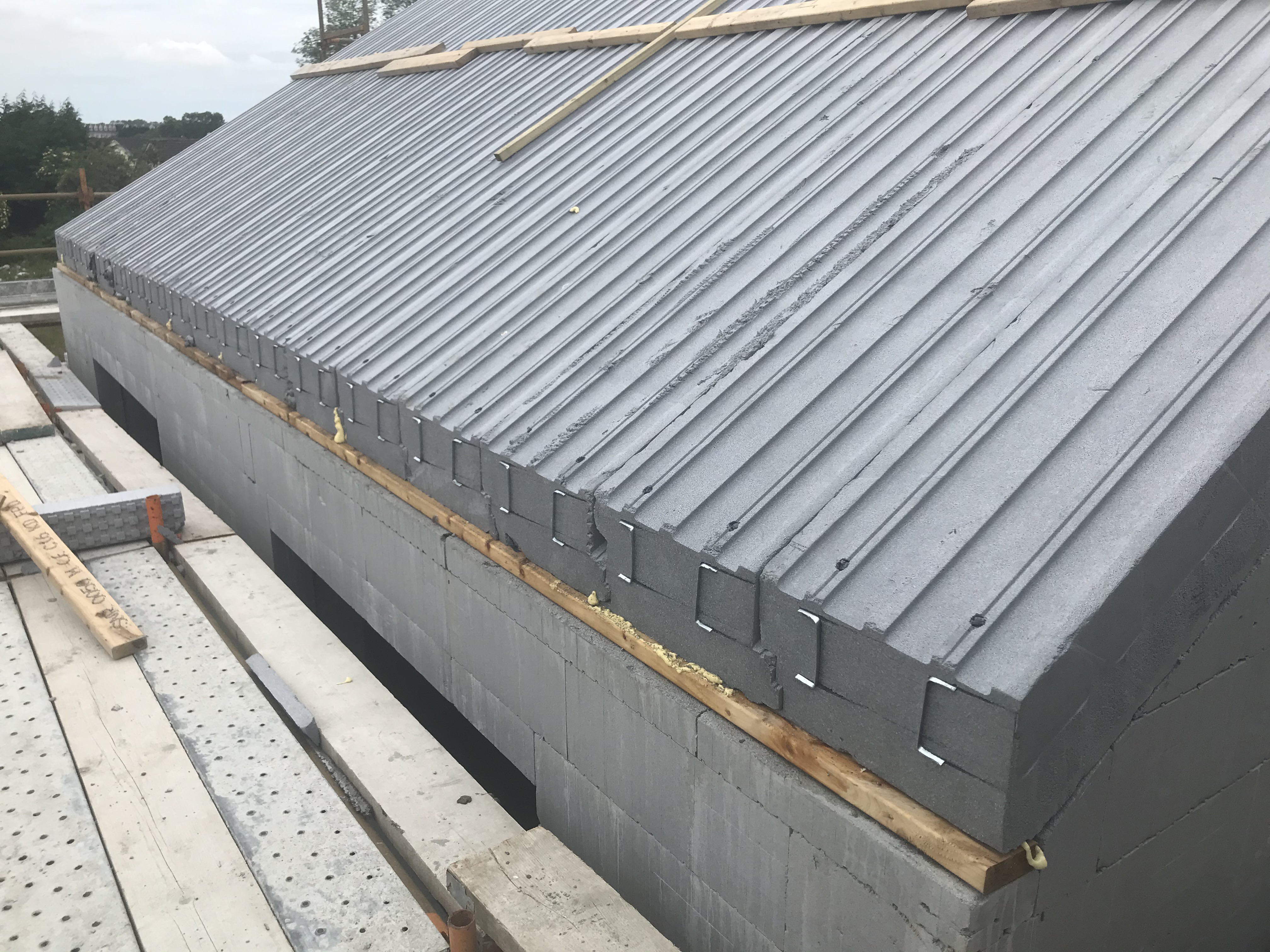
- ICF Construction: ICF walls are built with reinforced concrete and fire-retardant Expanded Polystyrene (EPS) foam, providing a fire protection rating of up to 4 hours—four times that of a typical wood-frame structure.
- Timber Frame Construction: While timber can be treated to be fire-resistant, it is still more susceptible to fire than steel or concrete. Fire can spread quickly in timber-framed buildings, potentially leading to significant damage.
- Structural Integrity During Fire
- ICF: The concrete core of ICF walls maintains structural integrity under high temperatures, providing occupants with more time to evacuate and reducing the risk of structural collapse.
- Timber Frame: Timber is combustible and can lose structural strength when exposed to fire, increasing the risk of collapse. While fire-resistant treatments can enhance its performance, timber still poses a higher risk compared to concrete.
- Fire Safety Considerations
- ICF: The fire-resistant properties of ICF contribute to overall building safety, potentially leading to lower insurance premiums and enhanced occupant safety.
- Timber Frame: Buildings constructed with timber may require additional fire safety measures, such as fire-resistant treatments and protective cladding, to mitigate the inherent fire risks associated with wood.
Conclusion
ICF construction offers superior fire resistance compared to timber frame construction due to its concrete core and fire-retardant materials. This enhanced fire performance contributes to increased occupant safety and may result in lower insurance costs. However, timber frame buildings can achieve improved fire resistance with appropriate treatments and protective measures.
U-Value comparison
When comparing the thermal performance of Insulated Concrete Formwork (ICF) and timber frame construction, the key metric is the U-value, which measures the rate of heat transfer through a building element; lower U-values indicate better insulation.
U-Values of ICF and Timber Frame Walls
- ICF Walls: Typically achieve U-values ranging from 0.11 to 0.2 W/m²·K, depending on the thickness and type of insulation used. For example, a standard ICF wall with a 100mm external leaf of block or cement board can achieve a U-value of 0.2 W/m²·K. A 150mm external leaf can achieve a value of 0.15 W/m²·K.
- Timber Frame Walls: Standard timber frame walls with 140mm mineral wool insulation can achieve U-values around 0.29 W/m²·K. Using higher-performance insulation materials, such as polyurethane, can improve this to approximately 0.24 W/m²·K.
Factors Influencing U-Values
- Insulation Material and Thickness: The type and thickness of insulation significantly impact the U-value. For instance, replacing mineral wool with polyurethane in a timber frame can reduce the U-value.
- Wall Construction Details: The overall U-value is also affected by factors such as airtightness, thermal bridging, and the quality of construction.
Considerations
- Energy Efficiency: Lower U-values contribute to better energy efficiency, leading to reduced heating and cooling costs.
- Building Regulations: Compliance with local building regulations regarding thermal performance is essential.
- Climate Conditions: In colder climates, achieving lower U-values is particularly beneficial for maintaining indoor comfort and reducing energy consumption.
In summary, both ICF and timber frame constructions can achieve low U-values, with ICF often providing superior thermal performance due to its continuous insulation and thermal mass properties. However, the actual U-value achieved depends on the specific materials and construction methods employed.
Airtightness comparison
When comparing the thermal performance of Insulated Concrete Formwork (ICF) and timber frame construction, the key metric is the U-value, which measures the rate of heat transfer through a building element; lower U-values indicate better insulation.
U-Values of ICF and Timber Frame Walls
- ICF Walls: Typically achieve U-values ranging from 0.11 to 0.2 W/m²·K, depending on the thickness and type of insulation used. For example, a standard ICF wall with a 100mm external leaf of block or cement board can achieve a U-value of 0.2 W/m²·K. A 150mm external leaf can achieve a value of 0.15 W/m²·K.
- Timber Frame Walls: Standard timber frame walls with 140mm mineral wool insulation can achieve U-values around 0.29 W/m²·K. Using higher-performance insulation materials, such as polyurethane, can improve this to approximately 0.24 W/m²·K.
Factors Influencing U-Values
- Insulation Material and Thickness: The type and thickness of insulation significantly impact the U-value. For instance, replacing mineral wool with polyurethane in a timber frame can reduce the U-value.
- Wall Construction Details: The overall U-value is also affected by factors such as airtightness, thermal bridging, and the quality of construction.
Considerations
- Energy Efficiency: Lower U-values contribute to better energy efficiency, leading to reduced heating and cooling costs.
- Building Regulations: Compliance with local building regulations regarding thermal performance is essential.
- Climate Conditions: In colder climates, achieving lower U-values is particularly beneficial for maintaining indoor comfort and reducing energy consumption.
In summary, both ICF and timber frame constructions can achieve low U-values, with ICF often providing superior thermal performance due to its continuous insulation and thermal mass properties. However, the actual U-value achieved depends on the specific materials and construction methods employed.
Get in touch with us for a free quote today:
Thermohouse Insulating Concrete Formwork (ICF) and low energy building solutions are sold throughout Europe within our network of professional and experienced business development partners.
We would love to hear about your upcoming project or answer any technical questions you may have.
To contact us please fill out our ‘contact form’ or call our office to speak to one of our technical sales advisers.

Thermohouse Support Network
Thermohouse has a complete support network, handling everything in your low energy building project from the on-site manufacture of the building system through to constructing your A-Rated home and a lot more in between. This ensures a cost efficient, streamlined and seamless process from the moment we take your call.

1 .Thermohouse offers complete in-house tech support, our technical and design office has industry professionals such as structural engineers, CAD technicians & estimators to assist with your project.
2 .We manufacture the entire low energy building system in our state of the art manufacturing facility in Killarney, Co. Kerry, Ireland.
3 .Our supply and install service is provided by our expert team & available for self build projects and developments throughout Ireland and the UK.
4 .Your A-Rated home, built to a very high standard is future-proof, structurally sound and offers year-round warmth and comfort with minimal energy use.
View our brochure now to learn more key information about how Thermohouse is the best option for you: